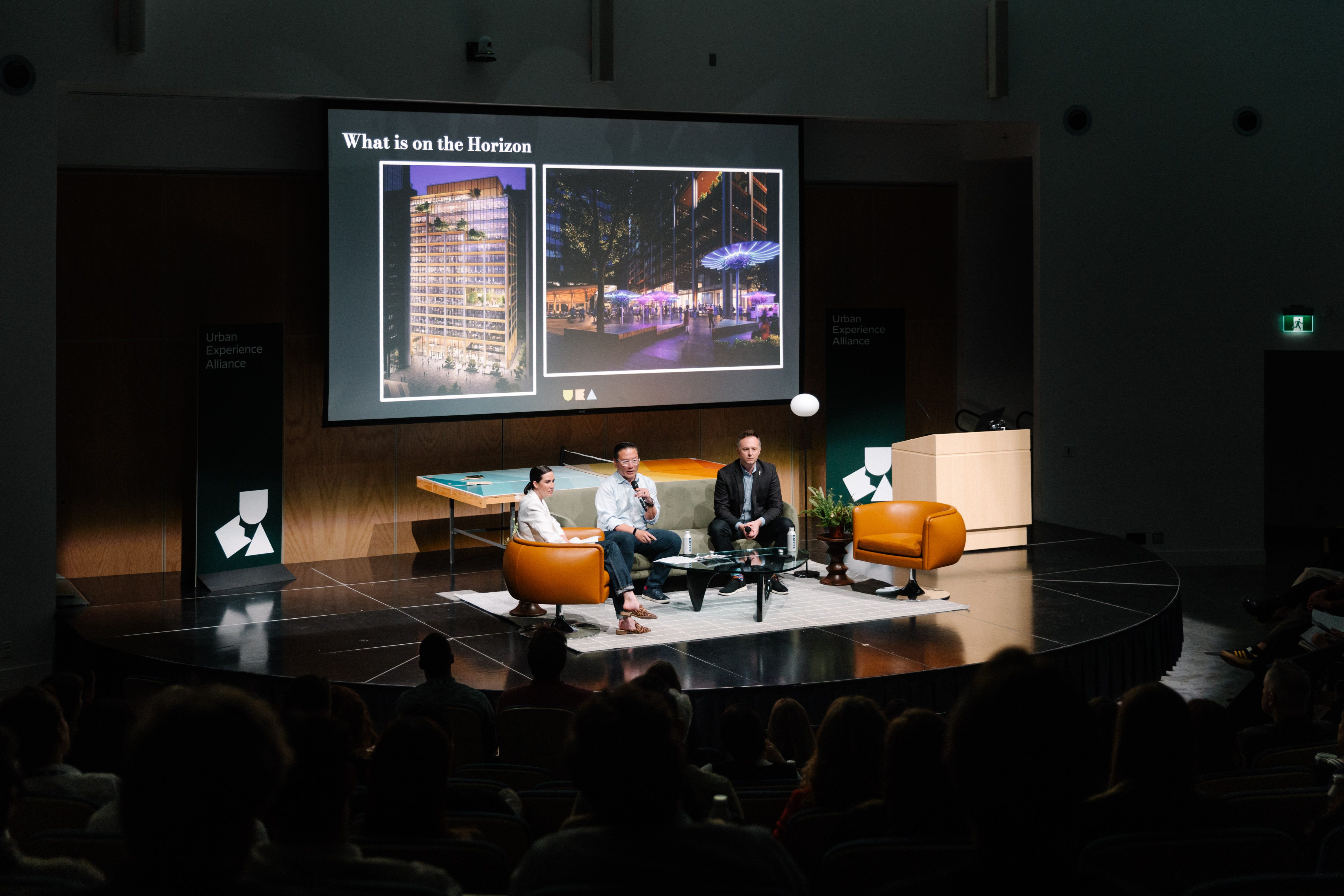
Industry leaders Chuck We, Executive Vice President of Pacific Northwest, Hudson Pacific, and Ted Mildon, Vice President of Office Leasing and Operations at Oxford Properties, shared how innovative placemaking is helping reclaim Vancouver’s downtown offices, creating spaces that attract employees and energize the city.
Industry leaders Chuck We, Executive Vice President of Pacific Northwest, Hudson Pacific, and Ted Mildon, Vice President of Office Leasing and Operations at Oxford Properties, shared how innovative placemaking is helping reclaim Vancouver’s downtown offices, creating spaces that attract employees and energize the city.
Their presentation began with a simple symbol: a ping pong table. While seemingly quirky, this table demonstrated the power of small gestures to transform leftover spaces between buildings into hubs of engagement. Years ago, a single outdoor table at Oxford sparked community interaction, illustrating that creativity—even in modest forms—can have a lasting impact.
The pandemic dramatically reshaped office life. Between 2020 and 2022, Vancouver’s downtown emptied, leaving small businesses struggling and public spaces underused. By 2022, employees began returning, and organizations responded by investing in social and collaborative spaces, quiet zones, and privacy features to balance the comfort of home with office functionality. CEOs experimented with everything from “puppy days” and massages to food, drinks, and corporate perks to encourage downtown attendance.
By 2025, tenants increasingly sought turnkey, high-quality spaces. Creative placemaking has been key in revitalizing office environments. Chuck and Ted highlighted three standout initiatives:
The Bark Park – A dog-friendly rooftop park on a garage, hosting DJs, beer gardens, and pet events, proving that well-designed amenities drive engagement and community.
The Den – A multi-use space combining conference rooms, lounges, and a coffee/cocktail bar, accommodating public events, corporate gatherings, and casual coworking.
The Neighborhood Patio – A former smoker’s pit turned vibrant plaza featuring coffee bars, beer gardens, and live art events, transforming an overlooked corner into a destination.
Art and culture are also central to their strategy. Collaborations with local artists have turned lobbies, stairwells, and other shared spaces into visually engaging, permanent installations, attracting visitors from across the city and enhancing dwell time.
Ted emphasized a key challenge: municipal approvals for such creative interventions can be slow and complex, discouraging landlords from experimenting. Yet these efforts—though difficult to quantify—play a critical role in making cities healthier, more vibrant, and more resilient.
The takeaway is clear: reclaiming the office isn’t just about occupancy rates—it’s about creating environments that inspire, connect, and engage. From playful ping pong tables to dog parks, mixed-use lounges, and public art, Vancouver’s downtown shows how thoughtful placemaking can revitalize workspaces and, in turn, the city itself.